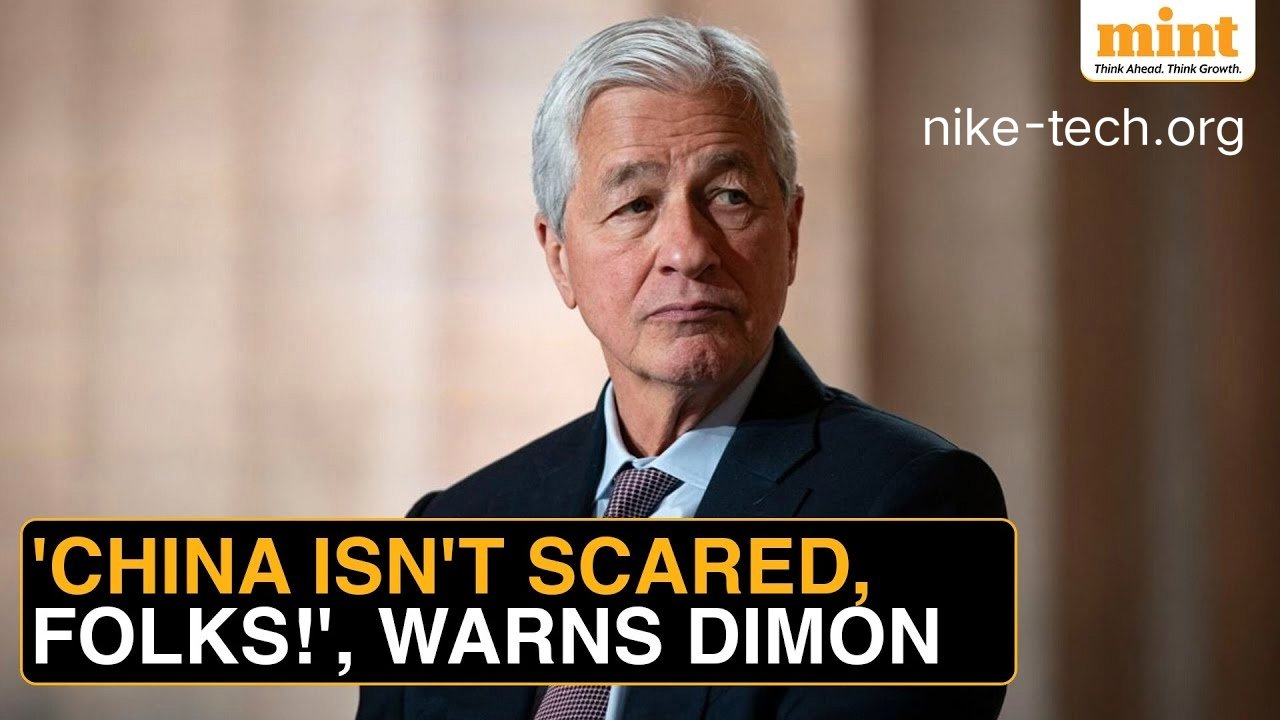
The growing technology rivalry between the United States and China is shaping the future of the global economy. From artificial intelligence to semiconductors, both nations are competing to lead the next wave of innovation. Amid this tension, Jamie Dimon, the CEO of JPMorgan Chase, has offered a practical and balanced perspective that stands out in a highly polarized debate.
This article explains the US–China technology competition and explores Dimon’s views in a clear, human-centered way.
The Rise of a Global Tech Rivalry
Over the past decade, technology has become the core of global power. It is no longer just about gadgets or software—it’s about economic strength, military capability, and political influence.
The United States has long been a leader in innovation, home to major companies like Apple and Microsoft. Meanwhile, China has rapidly advanced with companies such as Huawei and Alibaba Group, backed by strong government support.
This competition has intensified as both countries invest heavily in:
- Artificial Intelligence (AI)
- 5G networks
- Semiconductor manufacturing
- Quantum computing
- Cybersecurity
These technologies will define industries, economies, and even global leadership in the coming decades.
Jamie Dimon’s Perspective: Competition Without Chaos
Jamie Dimon’s approach to the US–China tech competition is neither alarmist nor dismissive. Instead, he promotes a realistic middle ground.
1. Competition is Natural
Dimon acknowledges that when two powerful economies exist, competition is unavoidable. The US and China are the world’s largest economic forces, so rivalry—especially in technology—is expected.
However, he does not see this as a zero-sum game where one side must completely defeat the other.
2. Warning Against Full Decoupling
One of Dimon’s biggest concerns is the idea of “decoupling,” where the US and China completely separate their economic and technological systems.
He argues that this would be harmful for several reasons:
- Global supply chains would be disrupted
- Businesses would face higher costs
- Innovation could slow down
- Financial markets could become unstable
Dimon believes that while some strategic separation may be necessary, complete decoupling would damage both countries and the global economy.
3. Focus on Domestic Strength
Instead of focusing only on China’s rise, Dimon encourages the United States to strengthen its own foundation.
This includes:
- Investing in education and workforce skills
- Supporting innovation and research
- Improving infrastructure
- Maintaining a strong financial system
According to Dimon, long-term success comes from internal strength, not just external competition.
4. The Need for Cooperation
Even in a competitive environment, Dimon stresses that cooperation between the US and China is essential in certain areas.
These include:
- Climate change
- Global financial stability
- Public health challenges
- International trade systems
He believes that cutting off all ties would create more problems than it solves.
Why Semiconductors Are So Important
One of the most critical battlegrounds in this rivalry is semiconductor technology. Chips power everything—from smartphones to advanced AI systems.
The US has introduced export restrictions to limit China’s access to high-end chips. In response, China is investing billions to build its own semiconductor industry.
Dimon sees this as a strategic move but advises caution. Over-restricting technology could lead to unintended consequences, including global shortages and increased geopolitical tension.
Economic Impact on the World
The US–China technology competition affects not only governments but also businesses, investors, and everyday people.
Positive Effects
- Increased innovation and technological breakthroughs
- More investment in research and development
- Job creation in high-tech industries
Negative Effects
- Trade conflicts and tariffs
- Higher production costs
- Disruptions in global supply chains
Dimon emphasizes that maintaining economic stability should remain a priority, even during intense competition.
A Balanced Vision for the Future
Dimon’s overall message is clear: the world does not benefit from extreme positions. Instead of choosing between total rivalry or blind cooperation, he suggests a balanced approach.
His vision includes:
- Competing strongly in key technologies
- Protecting national security interests
- Maintaining global economic connections
- Encouraging innovation on both sides
This approach reflects a deeper understanding of how interconnected the modern world has become.
FAQs
1. What is the US–China technology competition?
It is the ongoing rivalry between the United States and China to lead in advanced technologies such as AI, semiconductors, and telecommunications.
2. Who is Jamie Dimon?
Jamie Dimon is the CEO of JPMorgan Chase and one of the most influential figures in global finance.
3. What does Dimon think about this competition?
He supports healthy competition but warns against extreme actions like complete economic decoupling between the two nations.
4. Why are semiconductors important in this rivalry?
Semiconductors are essential for modern technology, powering everything from smartphones to artificial intelligence systems.
5. What is decoupling?
Decoupling refers to reducing or cutting economic and technological ties between countries, especially in trade and supply chains.
6. How does this competition affect businesses?
It can lead to higher costs, supply chain disruptions, and new opportunities for innovation and growth.
7. Can the US and China still cooperate?
Yes, Dimon believes cooperation is necessary in areas like climate change, global finance, and health issues.
8. What is Dimon’s main advice?
Focus on strengthening domestic capabilities while maintaining global connections and avoiding extreme economic separation.
Conclusion
The US–China technology competition is one of the defining challenges of our era. While tensions are rising, voices like Jamie Dimon offer a more balanced and practical perspective.
Rather than promoting conflict, Dimon encourages smart competition combined with selective cooperation. His approach highlights an important truth: in a deeply connected world, progress depends not just on winning—but on managing competition wisely.